RipWise

We utilised technology to rip problems apart, not create them.

Rip currents are responsible for half of all swimming deaths on Australian beaches and over three quarters of annual rescues. Yet fewer than half of beachgoers can correctly identify one, even among those who consider themselves confident swimmers. RipWise is a beach kiosk that uses camera vision and machine learning to identify safe swimming zones in real time and deliver interactive rip safety education at the moment it matters most.

Live demo ↗ View presentation ↗

Client

University of Sydney

Discipline

UX Research
UX/UI Design
Service Design
Strategy

Timeline

4 months

50,000

Potential people engaged with beach safety education each year

20,000

People potentially informed with real rip safety knowledge

15+

Potential lives saved annually at RipWise locations

Beautiful beaches, invisible dangers

Our research surfaced three patterns that explain why people keep dying at beaches that carry warning signs. First, confidence does not equal competence: young men in particular showed swimming confidence wildly misaligned with their actual ability to identify rip currents. Second, a beach literacy gap exists for anyone not raised near the coast, regardless of swimming ability. Third, at-risk beachgoers ignored existing signage almost entirely, citing too much text and too little visual engagement.

The problem is not a shortage of information. It is a shortage of accessible, contextual, real-time guidance delivered at the exact moment it is needed: before someone walks into the water.
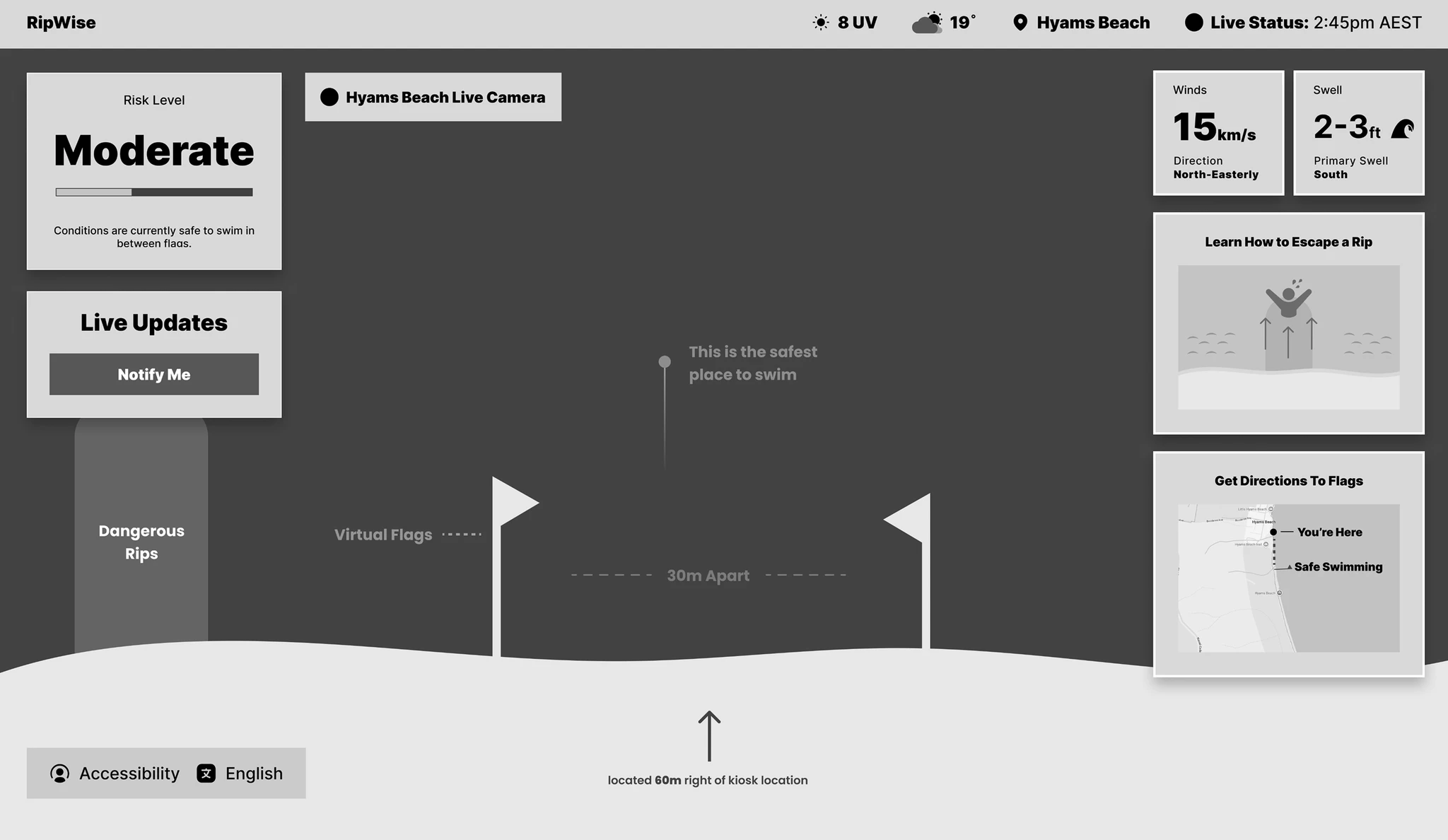
Early lo-fi wireframe of the RipWise kiosk interface

Design for the moment of decision

We conducted 50+ surveys, 10 in-depth interviews, and 5 contextual observations to map the beach visit from start to finish. One finding anchored everything: people are most receptive to safety information when they are already at the beach, preparing to swim. That window between arriving and entering the water is where RipWise lives.

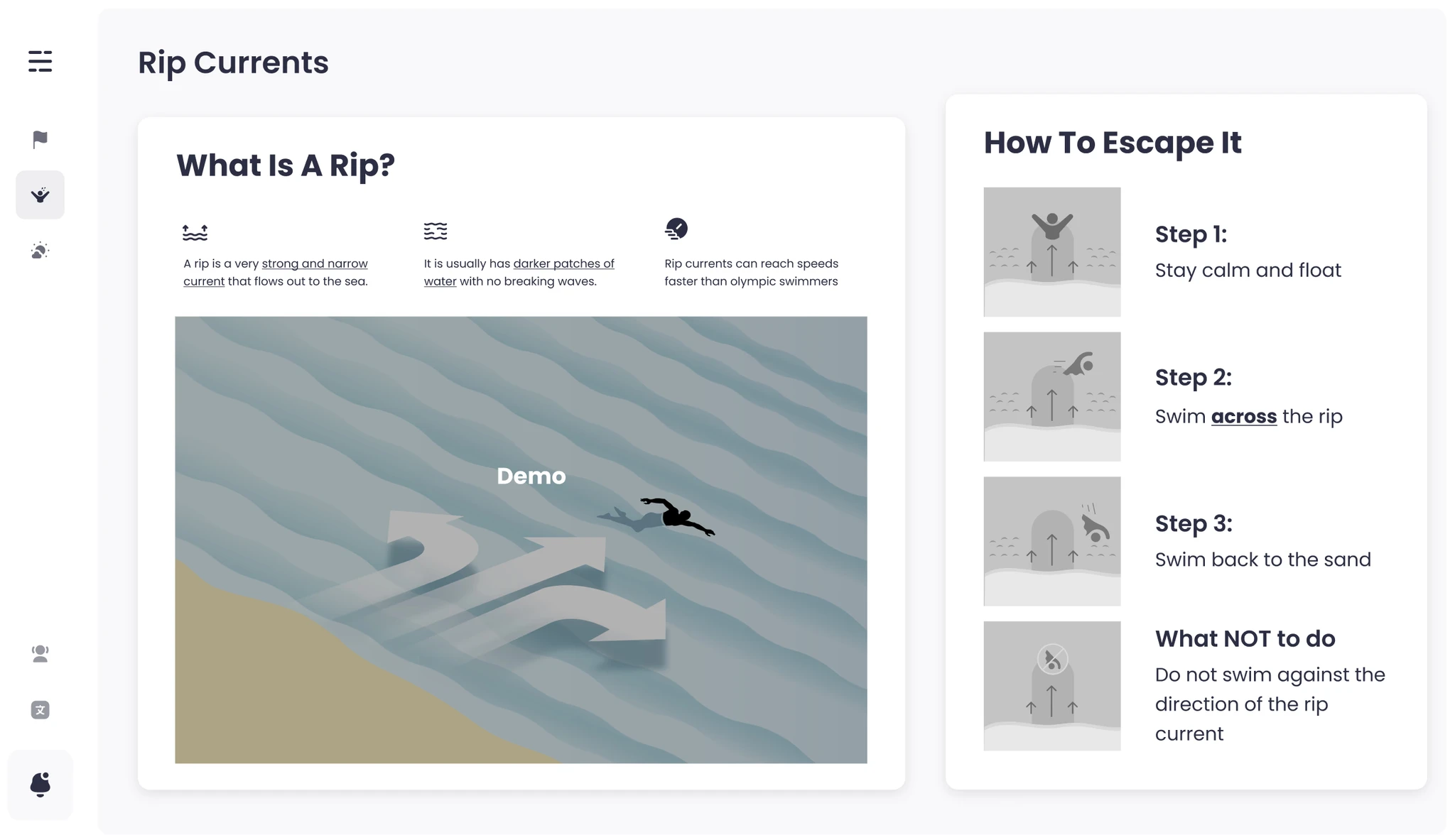
Rather than a brochure or app people have to seek out, RipWise is a physical kiosk placed at beach entry points. It uses camera vision and machine learning to identify the safest swimming location, presents a live beach map with highlighted safe zones, and walks users through interactive rip safety education in plain language with strong visual guidance.

A kiosk that thinks like a lifeguard

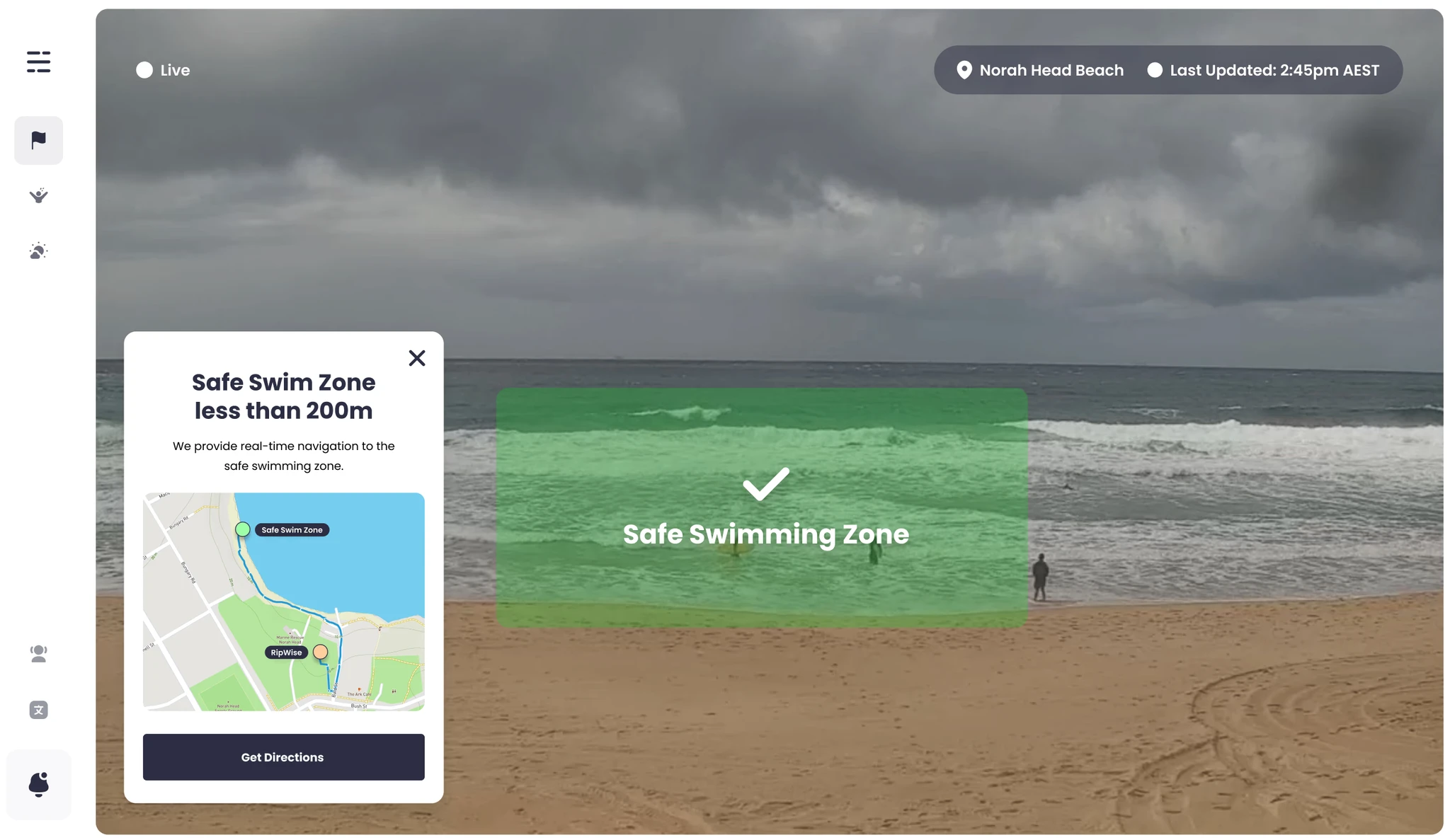
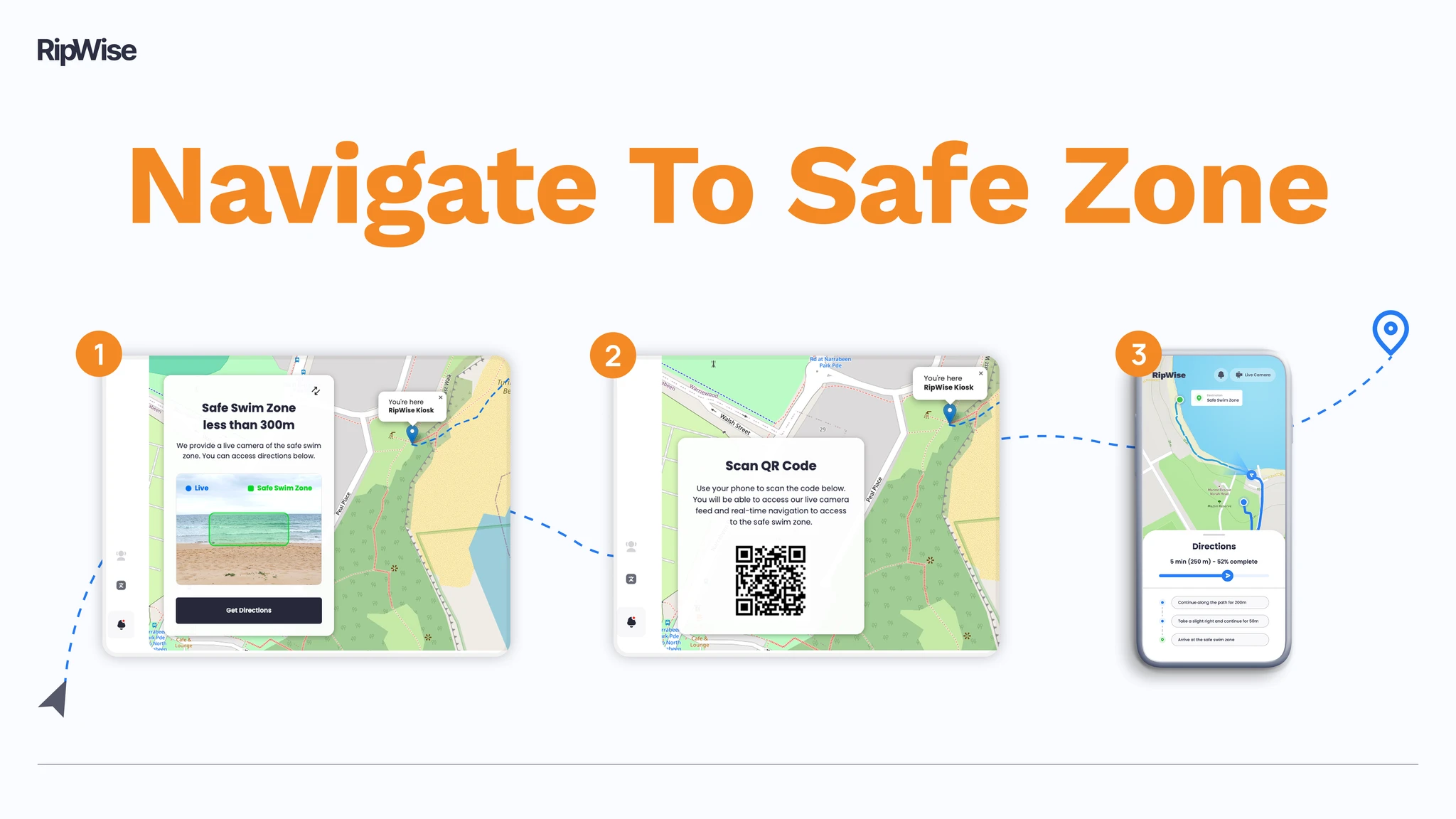
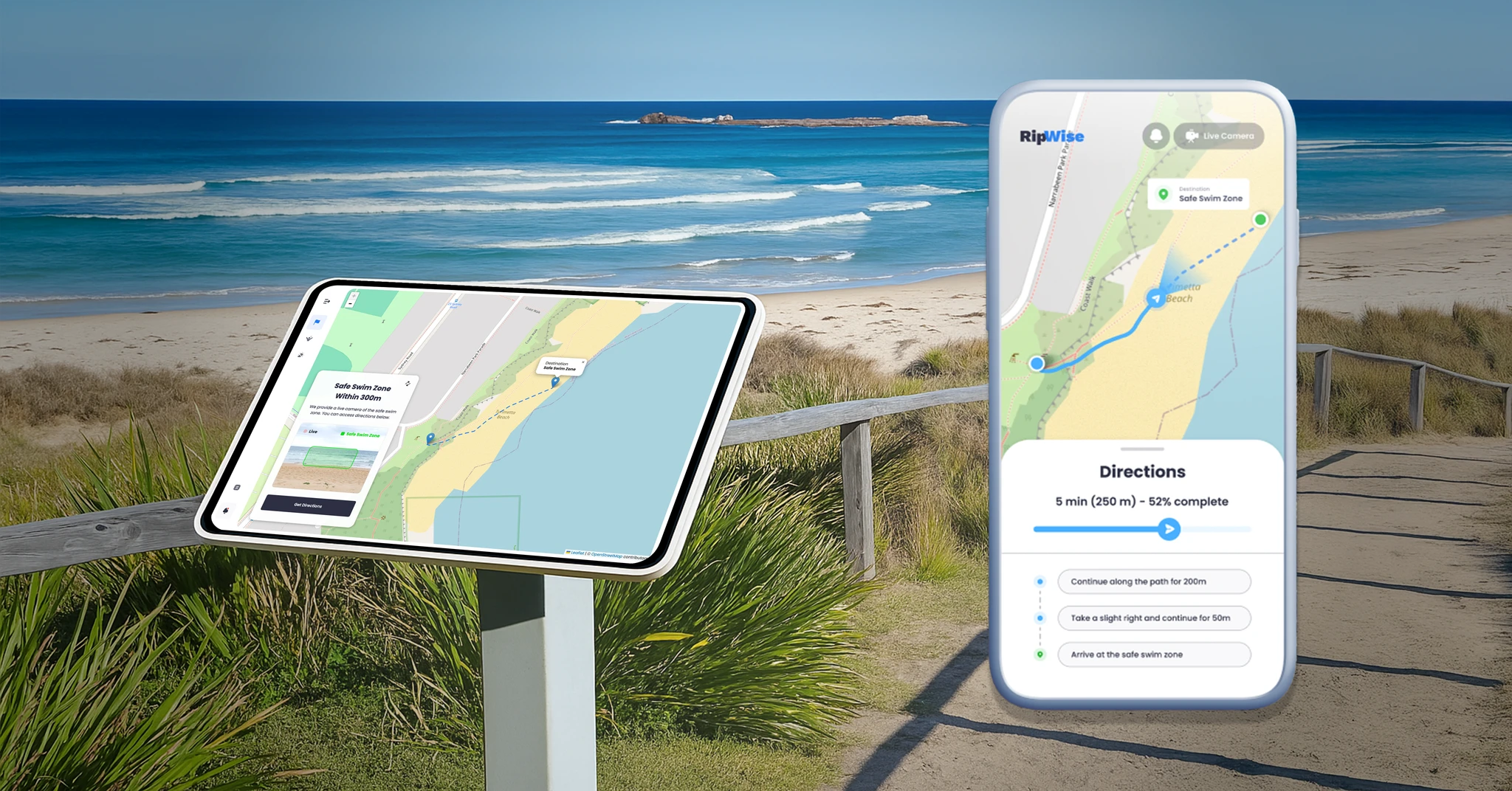
RipWise maps real-time rip activity onto a live beach view so users can see exactly where it is safe to swim. A QR code lets people transfer directions directly to their phone without friction. Real-time weather, UV, and wind data is surfaced via API so the kiosk stays accurate throughout the day.

The interface supports French and English and is designed for outdoor viewing conditions: high contrast, large type, and minimal steps. User testing shaped every decision. Early builds caused cognitive overload for rushed beachgoers, so we stripped back the homepage to focus solely on safe swimming locations. Animated explainers replaced static diagrams after users struggled to recall escape procedures. The "virtual flags" navigation feature was cut entirely after A/B testing showed the live beach video performed far better.

RipWise kiosk at a beach with phone navigation
RipWise live camera view with safe swimming zone overlay
3-step navigation flow to safe swim zone
Rip currents education screen
"How can we improve rip current and beach safety education for people visiting unpatrolled Australian beaches, especially those from non-coastal areas or diverse language backgrounds with little beach safety knowledge?"

Research to prototype

The project was connected to the UN Sustainable Development Goals and built over four months inside a university group context. We began with field research at unpatrolled beaches, mapping the full visitor journey from car park to waterline. Rapid prototyping in Figma, iterated against real user feedback, shaped the interaction model at each stage.

A projected rollout to 8 to 10 beaches monthly would cover 5 to 10 percent of Australia's unpatrolled coastline. Post-interaction, over 80 percent of participants could correctly identify a rip current compared to the 50 percent baseline. At full scale, RipWise is projected to reduce drownings by up to 80 percent at kiosk locations.

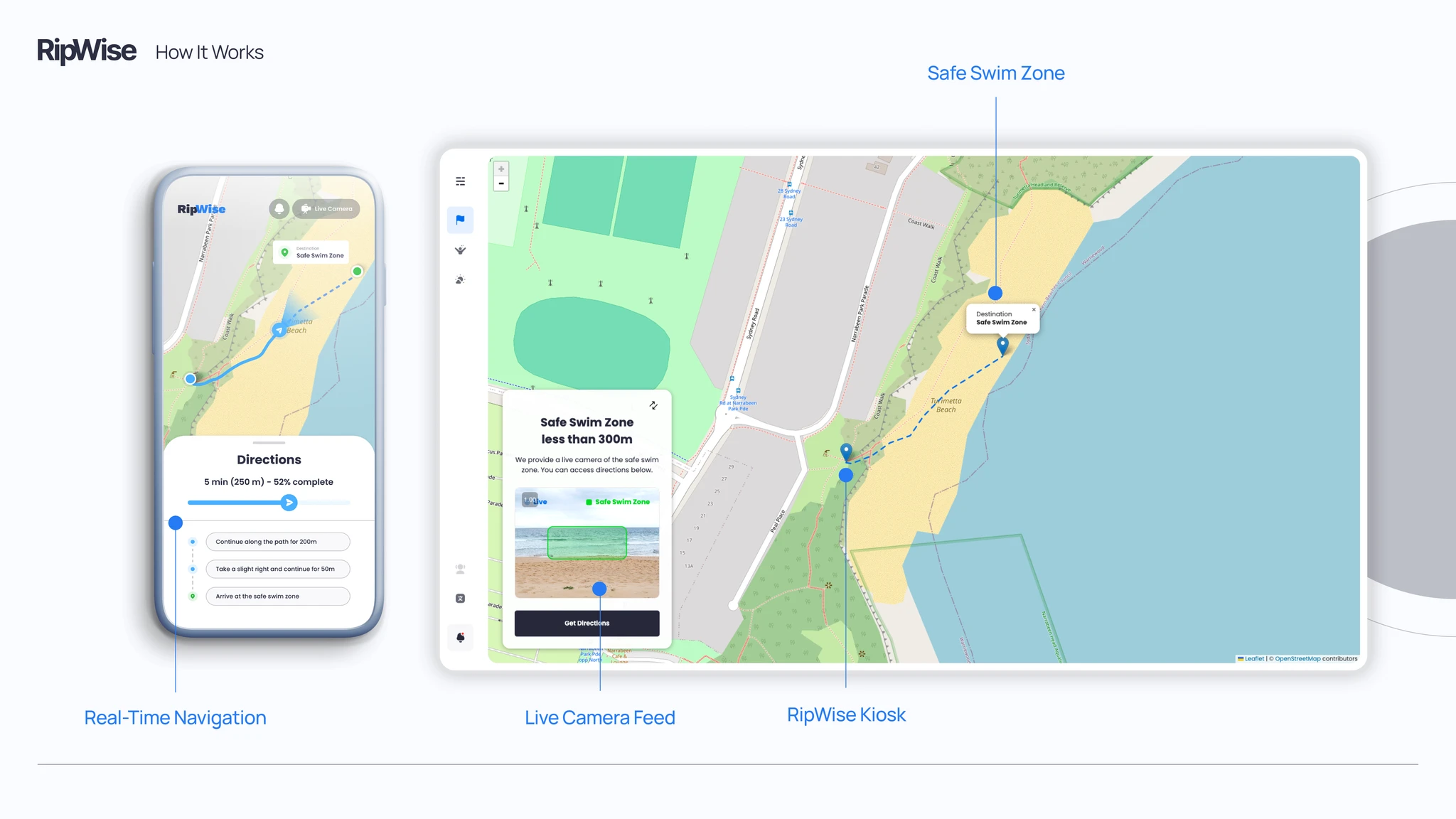
RipWise How It Works — annotated system overview